Radon Mitigation Systems
Active sub-slab systems designed for Minnesota basements, slabs and walkouts, installed by MDH-licensed mitigation professionals.
Typical$1,400-$2,600
About 2 in 5 Minnesota homes tested hold radon at levels worth fixing, by MDH's own count. Every install here is performed by an MDH-licensed mitigation professional, carries the state system tag, and ends with a verification test, not a handshake.
Step 1
A short call or form: your test result if you have one, the foundation type, and whether a closing date is involved. Plain answers, no pressure.
Step 2
An MDH-licensed mitigation professional walks the foundation, checks the sump and slab, and writes a fixed price with the suction points, fan and routing spelled out.
Step 3
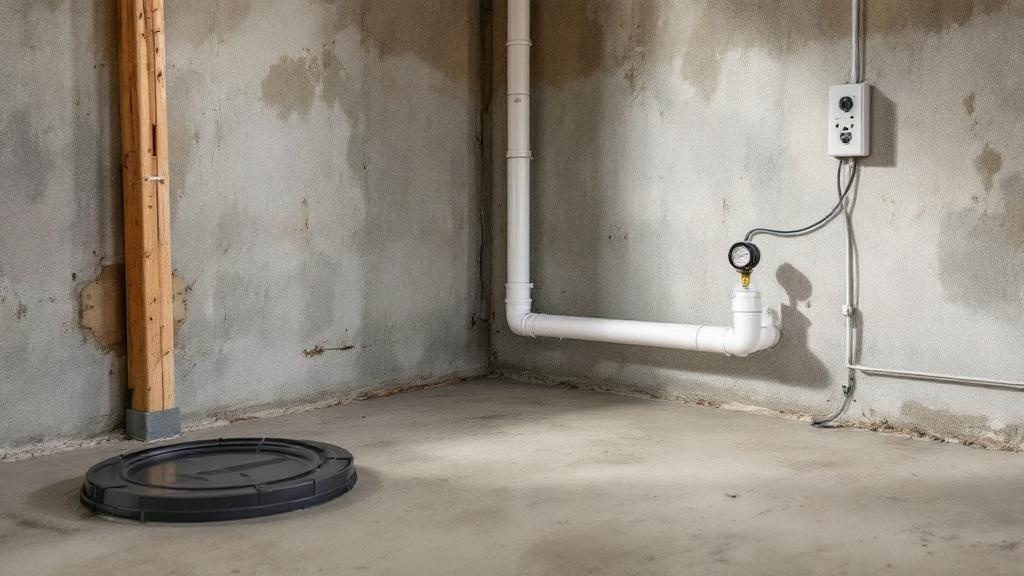
Most basement and slab systems go in within a single day: suction point, sealed sump cover, fan, gauge, labels, and the MDH system tag Minnesota requires.
Step 4
Once the fan has run, a follow-up test confirms the house actually came down. The result goes in your records, where Minnesota disclosure law will one day want it.
Minnesota homes tested have radon at levels that pose a serious health risk, per the Minnesota Department of Health.
Source: Minnesota Department of Health
Share of Minnesota properties tested from 2010 to 2016 at or above 4 pCi/L, with a statewide average of 4.5. The EPA action level is 4.0.
Since January 1, 2019, every mitigation system installed in Minnesota must carry an MDH system tag, and compensated radon work requires an MDH license.
About 2 in 5 Minnesota homes tested have radon at levels that pose a serious health risk; 2010-2016 testing put 44.1% of properties at or above 4 pCi/L, statewide average 4.5.
Minnesota requires an MDH license for radon work done for compensation, and an MDH system tag on every mitigation system installed since January 1, 2019.
The statute behind MDH radon licensure for measurement and mitigation professionals.
Hennepin, Ramsey, Dakota, Washington, Scott and Carver counties are EPA Radon Zone 1; Anoka County is Zone 2.
The calcareous, clay-rich glacial till and lake sediments under Minnesota emanate radon that sealed, heated homes concentrate.
Since 2009, new Minnesota homes must be built radon-resistant: sealed entry points and a passive vent pipe, with no fan.
National 2024 compilation of measured state radon test data, Minnesota included.
Every job comes with a written quote and no-pressure consultation. Workmanship warranty terms are set by your lead technician and confirmed before work begins.
Active sub-slab systems designed for Minnesota basements, slabs and walkouts, installed by MDH-licensed mitigation professionals.
Short-term and long-term testing by MDH-licensed measurement professionals, timed to the Minnesota heating season.
Sealed-membrane sub-membrane depressurization for crawl spaces, additions, and mixed-foundation Twin Cities homes.
Transaction testing and mitigation scheduled backward from closing, with the records Minnesota disclosure law expects.
Multifamily buildings, daycares, schools and commercial space, designed under the large-building standards.
Fan replacement, frozen or waterlogged discharge fixes, gauge checks, resealing, and retesting for existing systems.
Minnesota's radon problem is the meeting of two ordinary facts. The first is under the grass: the glaciers that flattened this state ground uranium-bearing rock into the calcareous, clay-rich till and lake sediments that now underlie nearly every metro foundation, and those soils release radon steadily, as the USGS geologic assessment of the region documents. The second is on the thermostat: a house that stays sealed and heated from October to April runs at lower pressure than the soil beneath it and inhales soil gas for half the year.
The measured results follow. MDH reports that about 2 in 5 Minnesota homes tested hold radon at levels posing a serious health risk, and its 2010 to 2016 statewide data put 44.1 percent of tested properties at or above the EPA action level of 4 pCi/L, with a statewide average of 4.5. Most of the metro's counties, Hennepin, Ramsey, Dakota, Washington, Scott and Carver, sit in EPA Zone 1; Anoka's sandy plain earns a Zone 2 shading that its basements routinely ignore.
Averages set the odds, not the outcome. Two houses on one Bloomington street can read far apart because of a sump cover, a slab crack, or a sand pocket. The only number that governs your house is the one a test produces.
Minnesota decided radon work was worth regulating directly, and the result protects homeowners twice. Minn. Stat. 144.4961 requires anyone testing or mitigating for compensation to hold a license from the Minnesota Department of Health; MDH maintains the roster, so any name on a proposal can be verified in a minute. All mitigation professionals you work with here hold that license.
The second protection is physical. Every mitigation system installed in Minnesota since January 1, 2019 must carry an MDH system tag, a numbered label on the system itself. The tag turns a basement pipe from an anonymous retrofit into a documented install: done under license, under the state program, traceable. For a buyer touring houses in Woodbury or Eagan, glancing for the tag is the fastest piece of radon due diligence there is.
Homeowners keep their traditional freedom: you may test your own house with a store kit and even work on your own home without a license. The line is compensation. The moment radon work is hired, the license applies, and the finished system gets tagged. Our licensing FAQ covers verification step by step.
Minnesota writes radon into its real estate law more firmly than most states. Under Minn. Stat. 144.496, the Radon Awareness Act, a seller must give the buyer written disclosure before the purchase agreement is signed: any known radon concentrations in the dwelling, any test records, any mitigation system and its documentation, plus the MDH publication on radon in real estate transactions.
The law requires honesty, not testing, so an untested house can legally sell with an empty disclosure. In practice the buyer's inspector fills the gap: transaction testing with a 48-hour continuous monitor is routine across the metro, and a result at 4 pCi/L or above becomes a negotiation item like any inspection finding. Who pays is settled by bargaining, not statute.
The asymmetry favors prepared sellers. A disclosure that reads "mitigation system installed, MDH tag number, post-install result 0.8" closes the topic before it opens, while a surprise 9.2 during the inspection period hands the buyer leverage at the worst moment. Testing before listing costs $20 to $300 and buys back the timeline. The real estate service runs both sides of this calendar, and the disclosure FAQ covers the seller's duties in detail.
Radon is the leading cause of lung cancer among people who have never smoked, and the EPA attributes about 21,000 US lung cancer deaths a year to it. Those are national figures; Minnesota's contribution to them is outsized because its homes are, in MDH's words, higher-risk than the national average, with 2 in 5 tested homes at levels worth fixing.
The risk mechanics reward clear thinking over alarm. Harm accrues as concentration multiplied by years, so a high reading is a reason to fix the house this season, never a reason to leave it tonight. The same arithmetic identifies who gains most from fixing: smokers, whose risks multiply with radon rather than add, and whoever sleeps or spends long evenings on the lowest level, which in this metro's split-entries and finished basements is often a kid.
The arithmetic also runs in reverse, which is the encouraging part. Cut the concentration and the accumulation slows from that day forward; a house brought from 8 to under 1 has changed its occupants' trajectory for every year that follows. Mitigation is not a renovation or an ordeal: one pipe, one fan, one day of work, verified by a retest.
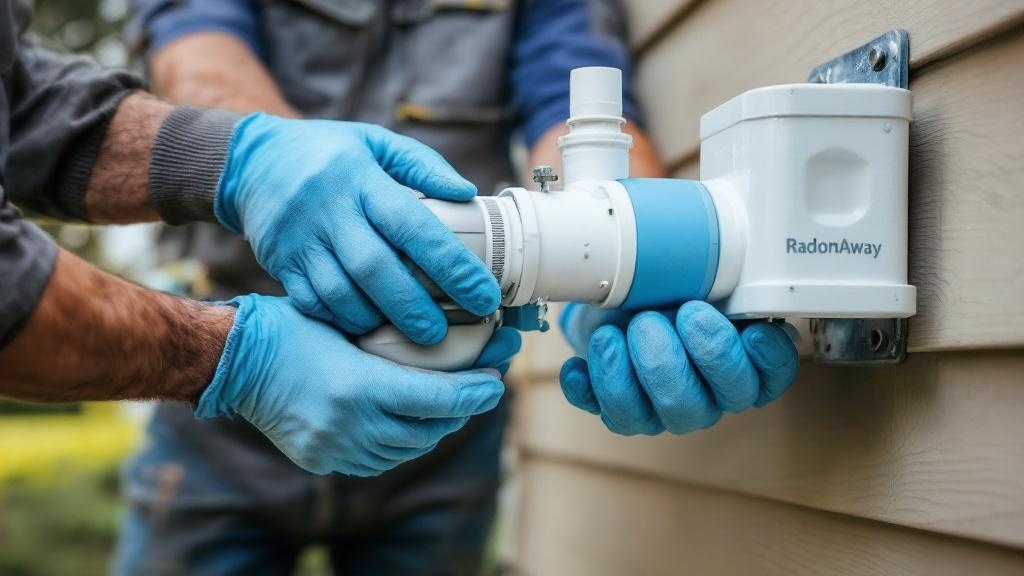
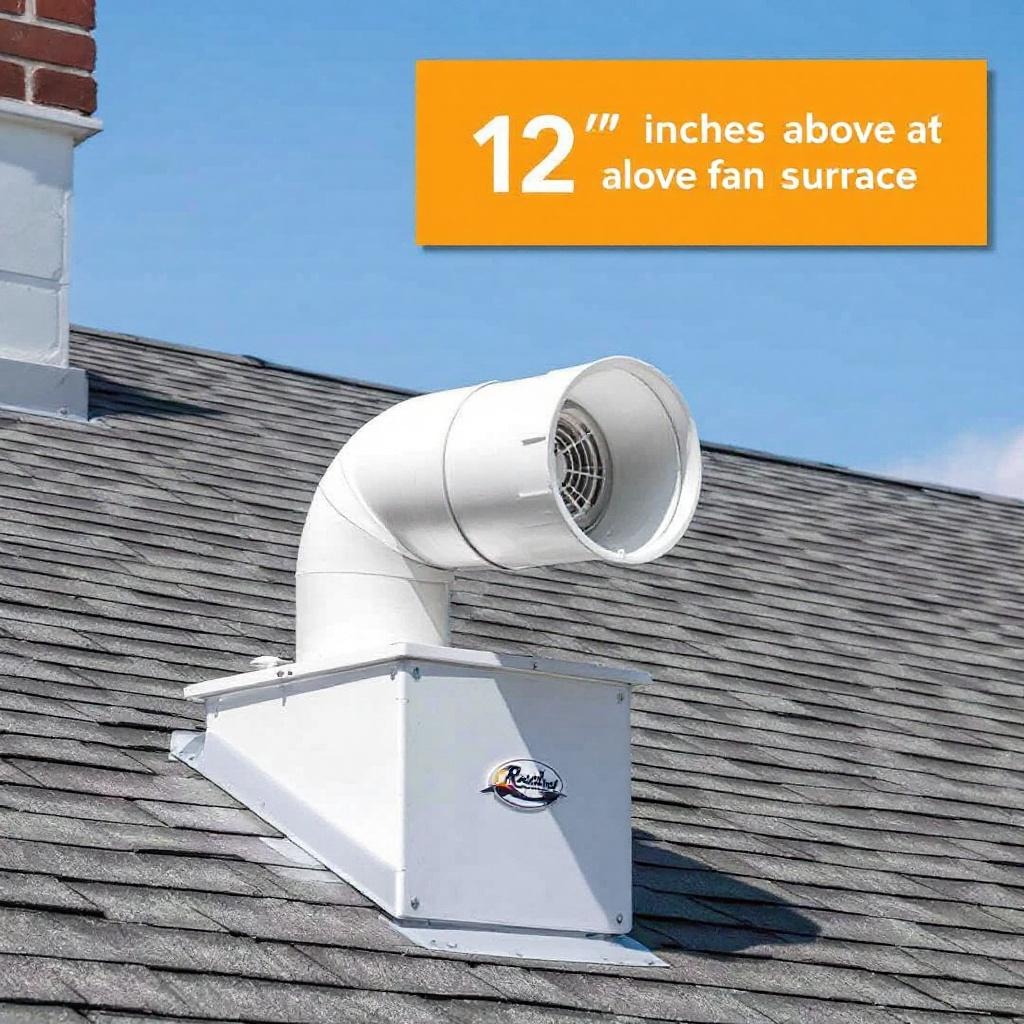
A finished system asks almost nothing of you: a labeled pipe with a U-tube gauge in the basement, a fan in the attic or on the wall, the MDH tag, and a discharge above the eave. The gauge is your dashboard. Its liquid columns sit unequal while the fan pulls; note what normal looks like, and glance at it when you pass, the way you glance at the sump pit in April.
Winter is when the glancing matters. Warm, moist soil gas meeting subzero outdoor air can frost a discharge outlet or send condensate back down a poorly sloped run, and a hard cold snap is the classic moment a tired fan finally quits. After each deep freeze, give the gauge a look; a reading that has collapsed to level means no suction, and a glance at the outlet for ice usually finds the cause. Fans themselves are the one consumable, typically five to ten years, and a swap is a service call, not a redesign.
Beyond that: reseal the sump cover after any pump service, keep the discharge clear, and retest every two years and after renovations, because the gauge proves airflow while only a test proves air. The paperwork, tag number and results included, stays with the house records that Minnesota disclosure law will eventually ask you to produce.
Minneapolis, St. Paul and the Twin Cities metro and surrounding communities. Same-day estimates within 15+ neighborhoods.
Share your test result if you have one, the foundation type, and any deadline. A licensed professional follows up with next steps and a design visit, and every install ends in a verification test.
Browse all 44 questions for more depth.
Most Twin Cities basement and slab homes land between $1,400 and $2,600 installed. A crawl space that needs a sealed membrane runs $2,000 to $3,800, adding a fan to a builder's passive pipe runs $800 to $1,300, and a professional test is $150 to $300.
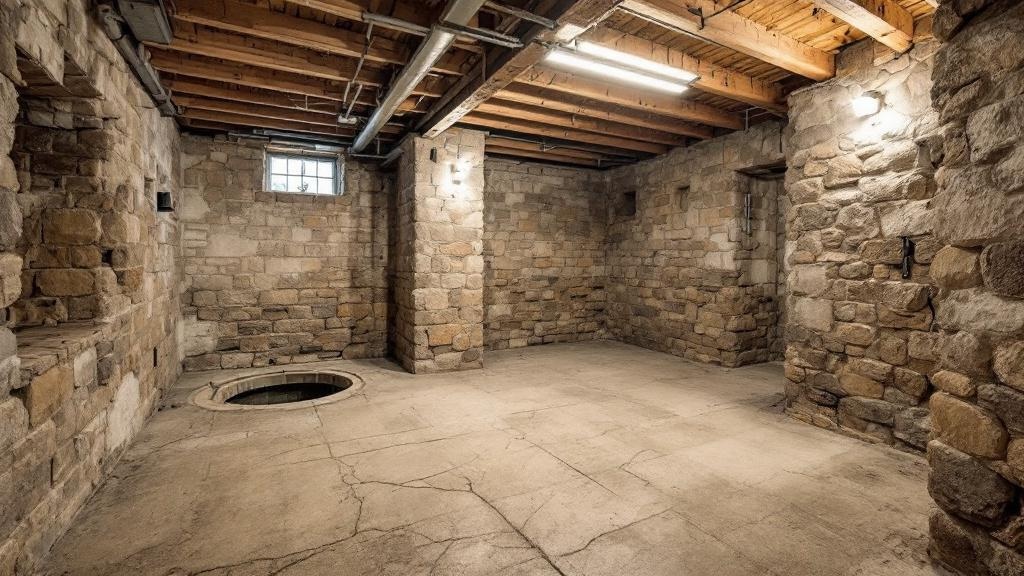
The house decides where you land inside the band. A 1990s Woodbury or Lakeville walkout with a clean poured foundation and a straight shot to the rim joist sits near the bottom. A 1920s Minneapolis basement with a sectioned floor, a stone-capped wall and an open sump basket sits near the top, because sealing and sump work take real hours. Dense clay till under the slab can push any house higher if the airflow check shows one suction point cannot reach the far corners. Ask every bidder to break out the fan model, the discharge route, the sump cover, and the sealing scope, and confirm the price includes the MDH system tag and a post-install test. Our winter cost breakdown goes line by line, and the calculator gives a starting range.
Radon is a radioactive gas produced as uranium in soil and rock decays. You cannot see, smell or taste it. It drifts up through foundations, collects in the lowest levels of a house, and over years of breathing it raises lung cancer risk.
The uranium under the Twin Cities is nothing exotic: it rides in the glacial till, lake sediments and outwash the ice sheets left across the metro, as the USGS geologic radon assessment of the region describes. The gas itself is inert, but its short-lived decay products attach to dust, lodge in lung tissue when inhaled, and irradiate it. The EPA ties about 21,000 US lung cancer deaths a year to radon exposure. Because the gas gives no warning at any concentration, measurement is the only detection there is, and Minnesota's numbers make measuring worth the trouble: MDH reports about 2 in 5 tested homes statewide hold a level worth fixing. See why Minnesota runs high.
Two reasons stack. The glacial soils under most of the state, calcareous clay-rich till and old lake sediments, release radon steadily. And Minnesota houses spend half the year sealed and heated, which pulls that soil gas indoors and holds it there.
The USGS geologic radon assessment for the region traces the source to the glacial deposits themselves: the ice sheets ground uranium-bearing rock into till and spread it nearly everywhere, so there is no lucky neighborhood sitting on inert ground. The climate does the rest. A tight, heated house in a long Minnesota winter runs at lower pressure than the soil beneath it, so the basement inhales soil gas for months at a stretch, and the sealed windows that keep heating bills sane also keep the radon concentrated. That combination shows up in the data: MDH's 2010 to 2016 results put 44.1 percent of tested properties at or above 4 pCi/L, against a national picture far below that. Geology sets the supply; the heating season sets the dose. See how radon gets into a house here.
Common enough to assume until tested. MDH says about 2 in 5 Minnesota homes tested have radon at levels that pose a serious health risk, and its 2010-2016 data put the statewide average at 4.5 pCi/L, above the EPA action level of 4.0.
The metro pattern inside those numbers is worth knowing: a county or statewide average describes a population of tests, not your block. The spread between next-door houses is wider still: foundation condition, sump configuration and soil pockets move individual results far more than the county line does. So the regional numbers answer only one question, whether testing is worth an evening of your attention, and in this metro the answer is plainly yes. A $20 kit or a $150 to $300 professional test settles what no map can. Start with winter testing, which is when Twin Cities houses show their true number.
Hennepin, Ramsey, Dakota, Washington, Scott and Carver counties are all EPA Zone 1, the highest-potential tier. Anoka County is Zone 2, moderate potential on the map, though measured results there still run high often enough that testing is just as necessary.
The EPA zone map predicts the average screening level a county's geology should produce: Zone 1 above 4 pCi/L, Zone 2 between 2 and 4. It was drawn in 1993 from geology, aerial radioactivity and soil data, and the EPA itself says it was never meant to tell an individual homeowner whether to test. Minnesota demonstrates why. Anoka County sits on the sandy Anoka Sand Plain rather than the clay till that covers most of the metro, which earns it the Zone 2 shading, yet plenty of Blaine and Coon Rapids basements test above 4 because sand moves soil gas easily even when it carries less uranium. Zone is a statement about geology, not about your house. Every county in this service area, whatever its color on the map, produces fixable homes every week. See the Anoka County question for the Zone 2 detail.
Yes. Anoka County shows moderate radon potential by EPA zone, but measured results still run high: real basements in Blaine and Coon Rapids test above 4 pCi/L regularly. The zone describes geology on average; a test describes your house.
The Zone 2 shading reflects the Anoka Sand Plain, the sandy outwash left by glacial meltwater across much of the county. Sand carries somewhat less uranium than the clay till south and west of it, which is what the 1993 map encodes. But sand is also permeable, so whatever radon the soil produces travels to a foundation with very little resistance, and the split-entry and rambler housing stock that fills both cities offers it ground contact on more than one level. The practical consequence: Anoka County homes cannot be skipped, they can only be tested. MDH recommends every Minnesota home test regardless of county, and the statewide 2-in-5 figure includes plenty of Zone 2 addresses. If your Blaine or Coon Rapids result comes back elevated, mitigation works identically here; the sandy soil actually makes suction easier to establish than in tight clay. See what your result means.
Yes. Minn. Stat. 144.4961 requires a license from the Minnesota Department of Health for radon testing or mitigation done for compensation. Homeowners may work on their own house unlicensed; anyone you pay must hold the MDH license.
The law, the Minnesota Radon Licensing Act, took effect in 2019 and covers measurement professionals, mitigation professionals and mitigation companies, with MDH running the license roster. Verification is quick: MDH publishes its list of licensed professionals, and a license number belongs on the proposal before you sign it. The license also drags quality rules behind it, because licensed work follows the national ANSI/AARST standards and every system installed since January 1, 2019 must carry an MDH system tag. All mitigation professionals you work with here hold the MDH license. Two red flags end a conversation fast: a bidder who cannot produce a license number, and a finished basement with a radon pipe but no tag. Our guide to choosing a licensed pro lists the questions worth asking before anyone drills.
A numbered tag the Minnesota Department of Health requires on every mitigation system installed since January 1, 2019. It marks the install as done under the state license program. Look for it on the pipe near the gauge.
The tag is the consumer's half of Minnesota's licensing law: the license tells MDH who did the work, and the tag tells everyone after them. For a buyer touring a Twin Cities house, it compresses a lot of due diligence into one glance. Tag present: the system went in under Minn. Stat. 144.4961, by a licensed professional, after 2018. Tag absent on a clearly newer system: ask hard questions, because compensated installs without the tag fall outside the rules. Tag absent on an older system: normal, since the requirement started in 2019, but the system should still be checked against current practice and retested. When you sell, the tag number and the install paperwork fold into the records Minnesota's disclosure law has you hand the buyer. Keep them together. See what sellers must disclose and the repair service if an inherited system needs attention.
About 2 in 5 Minnesota homes tested hold radon at levels worth fixing, by MDH's own count. Mon-Sat 8am-7pm.